Above the valleys
We leave early. The motorhome moves steadily through the Italian countryside. I bring only what’s necessary: a few clothes and my Fujifilm X-T30 with the 33mm lens, light and reliable. Everything else stays behind.
The plan is simple: a short trip to Assisi, three days on the road. It’s our first time traveling by motorhome and first time in Umbria, and the idea of stopping anywhere, of falling asleep wherever the road allows, feels new and exciting. I take it all in, paying attention to every detail, knowing this is a learning experience.
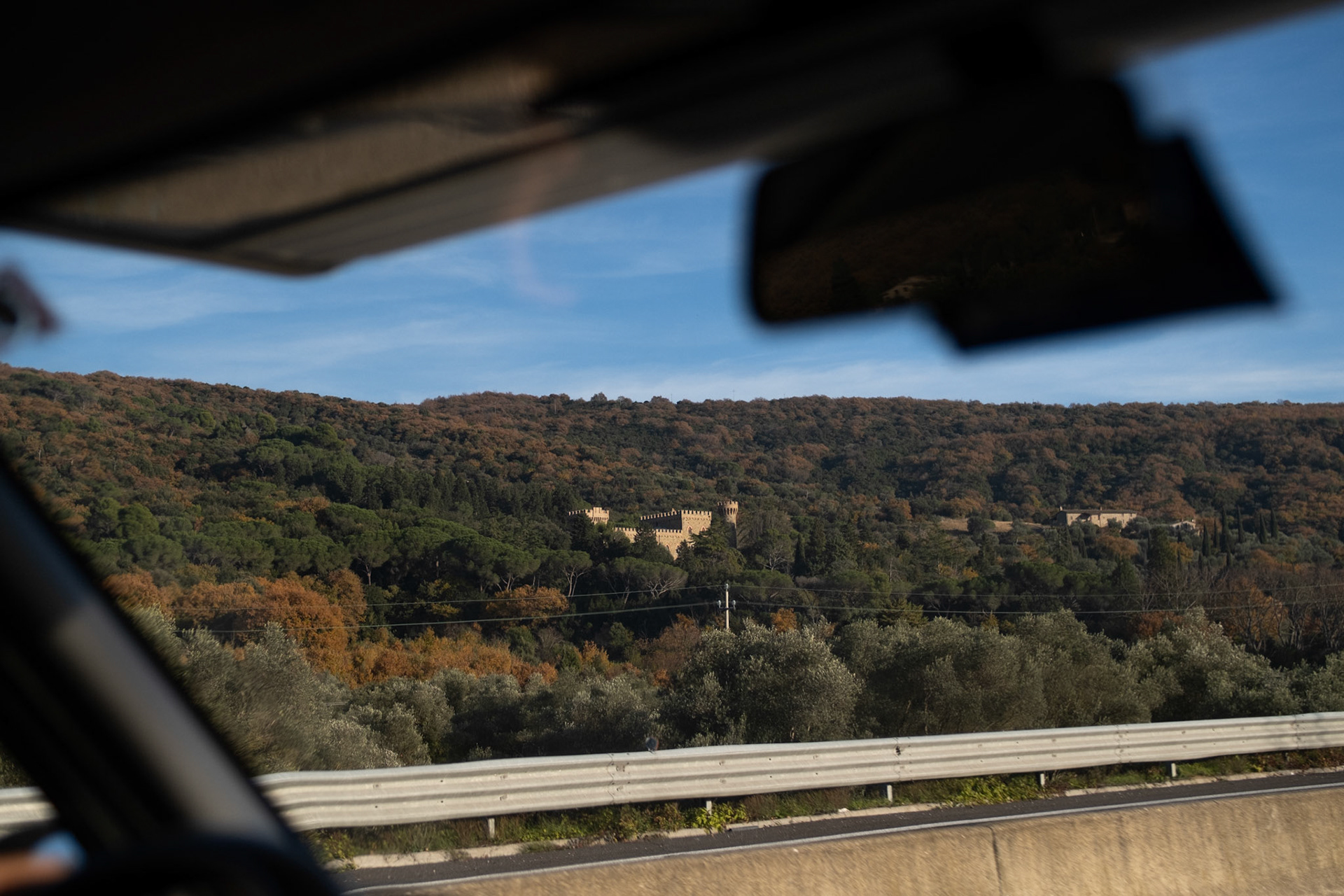
It’s early December, but the landscape still feels like autumn. Fields on both sides of the road are painted in soft oranges and browns. The hills are quiet, suspended between seasons. From time to time, a castle appears on the horizon, then disappears again as the road curves. Above us, the sky is clear and open.
Inside the motorhome, the sound of the engine becomes a steady rhythm. Conversation fades. Looking out the window, I start to slow down. Observation takes over.
As we approach the city of Assisi, the landscape begins to change. The city, built entirely of stone, can be seen from distance, with an unmistakable presence. Walls and towers emerge from the ground, shaped by centuries of history.
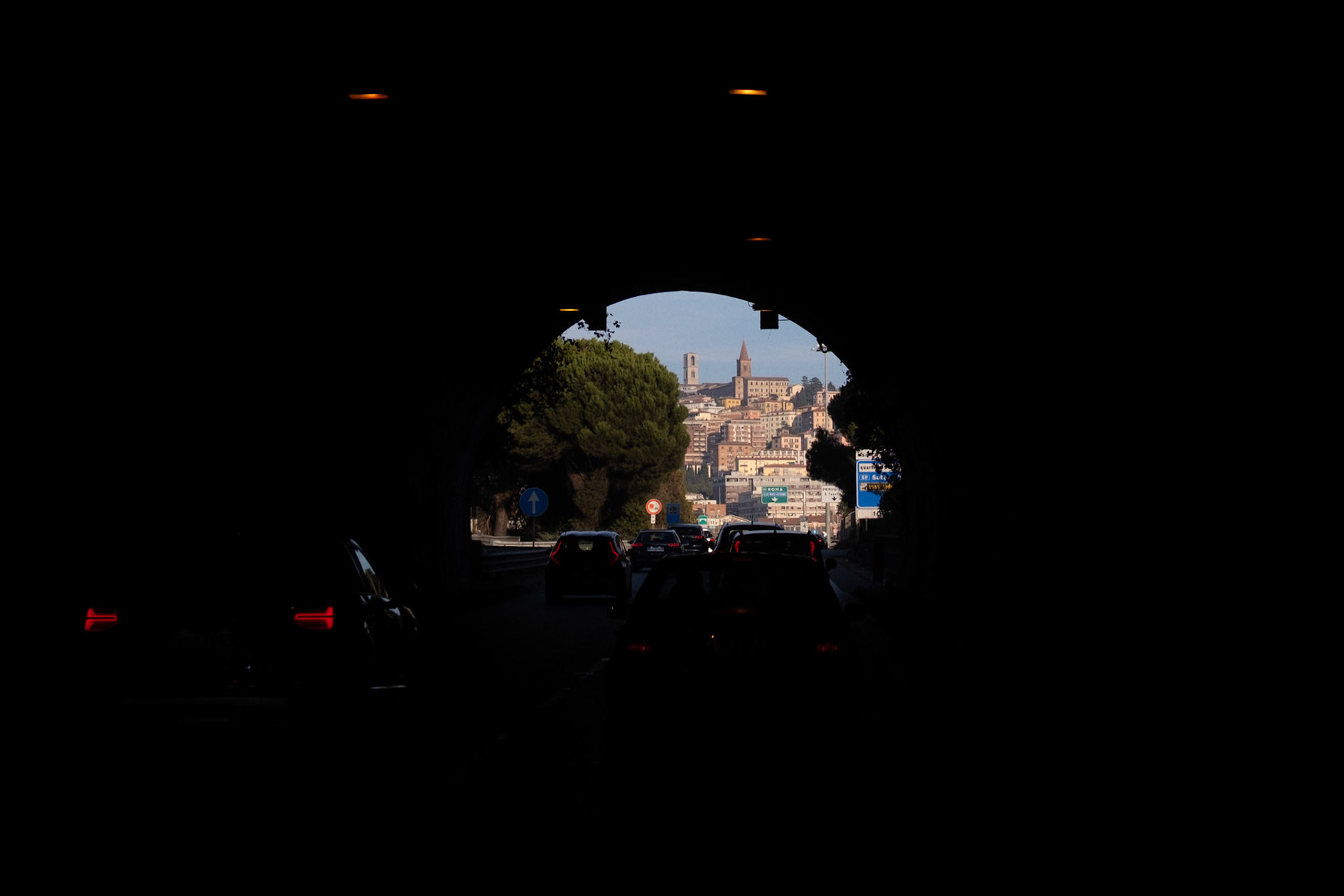
We pass through several tunnels, one after another. Each moment of darkness breaks the light and changes the pace of the journey. With every tunnel, the outside world feels a little farther away.
Then the city appears.
We arrive as the sun begins to set. Finding parking takes a while, but moving slowly gives us time to settle into the rhythm of the city. Walking the streets, the Basilica of Saint Francis appears, bathed in warm light. The stone reflects the last sun of the day.
From the city’s edge, the valley opens below us. Fields, farms and city lights seen from above. Later, walking back toward the motorhome, the sky clears completely. A meteor cuts through the darkness, burning for several seconds before vanishing. A rare moment. One that invites a wish.
The next morning, fog blankets the lower part of the city, limiting visibility. As we walk uphill, Assisi slowly reveals itself, stone buildings, arches, narrow streets. The fog softens the light, creating subtle tones and textures that I try to capture. Church bells ring through the mist, connecting streets we cannot see.
We continue climbing toward Rocca Maggiore, the highest point of the city. Inside the fortress, history feels close. A Banksy exhibition fills the space, an ironic contrast, art that speaks against war displayed within walls built for defense.
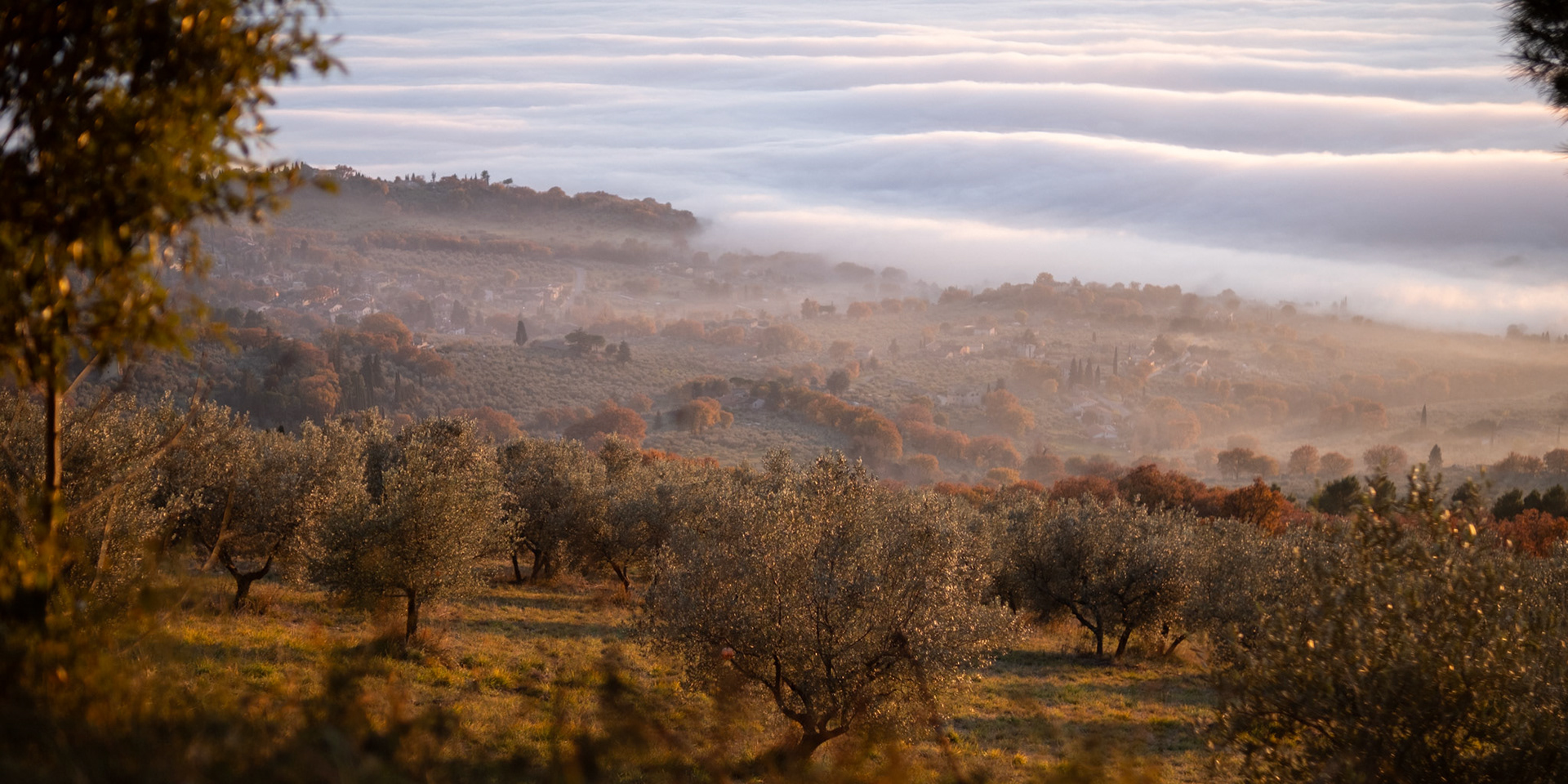
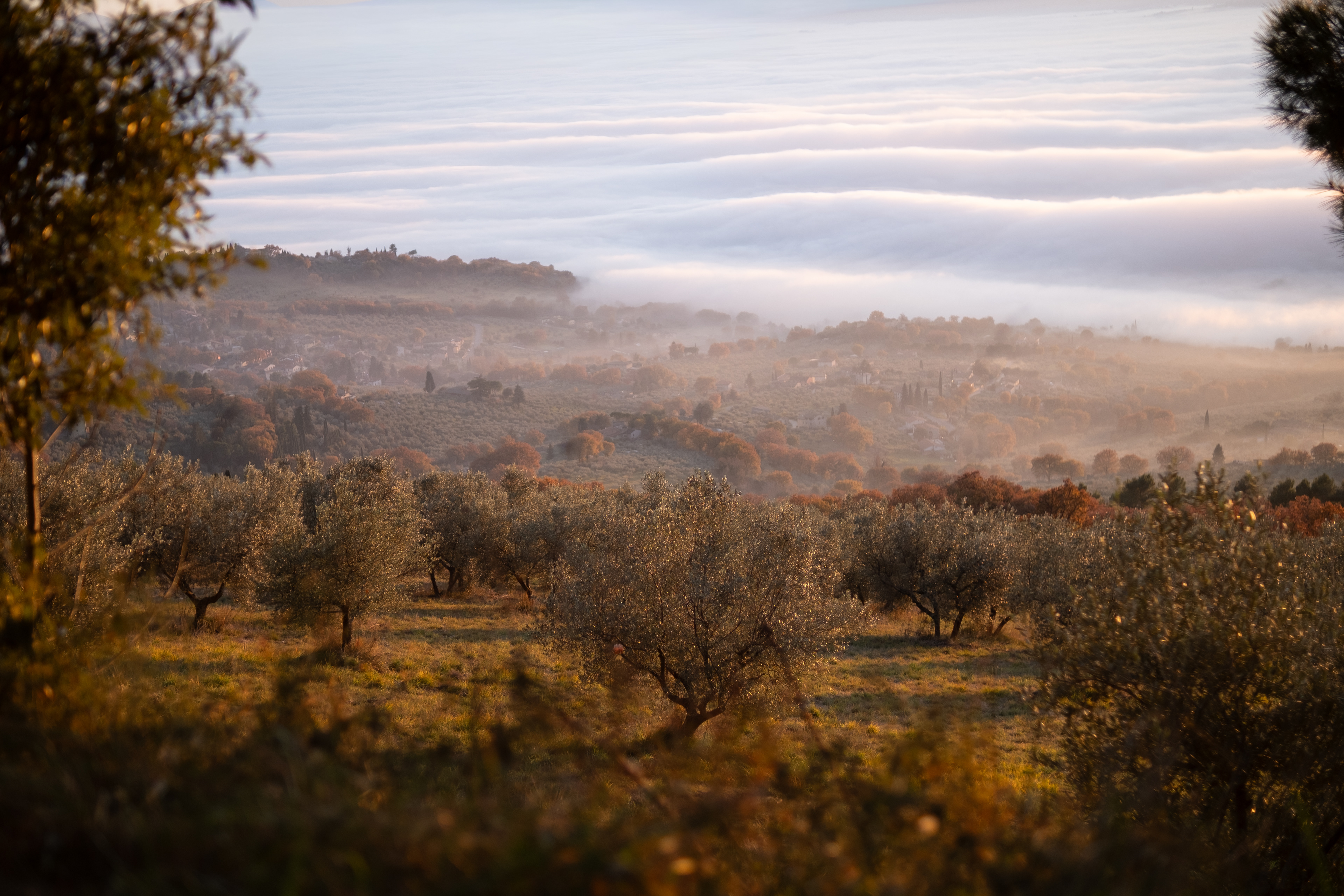
From the top, the view is breathtaking, opening wide over the city and the valleys beyond. The fog has settled filling the plains of Umbria like a vast, unmoving sea.
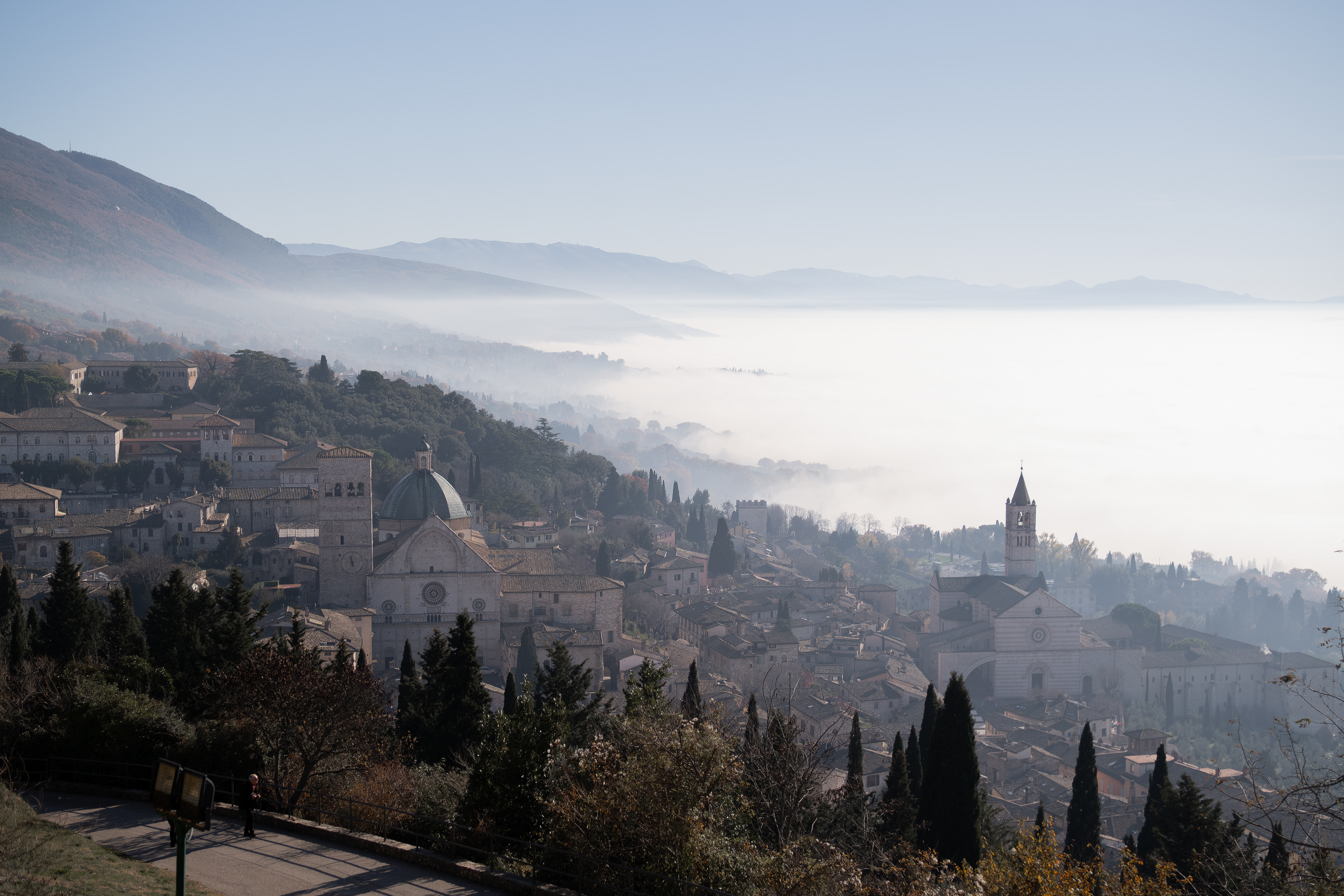
From the same point, the landscape opens in silence. I can spot the Basilica of Saint Francis emerging from the fog. It dominates the city, a symbol of Assisi’s history and faith, built to honor the life and teachings of its most famous son.
The Basilica sits between ground and sky, almost floating. From here, the city appears detached from the land below. The fog leaves to the eyes only shapes and light. It’s a natural phenomenon caused by a temperature inversion, and the effect looks surreal.
For a long moment, nothing needs to be said.
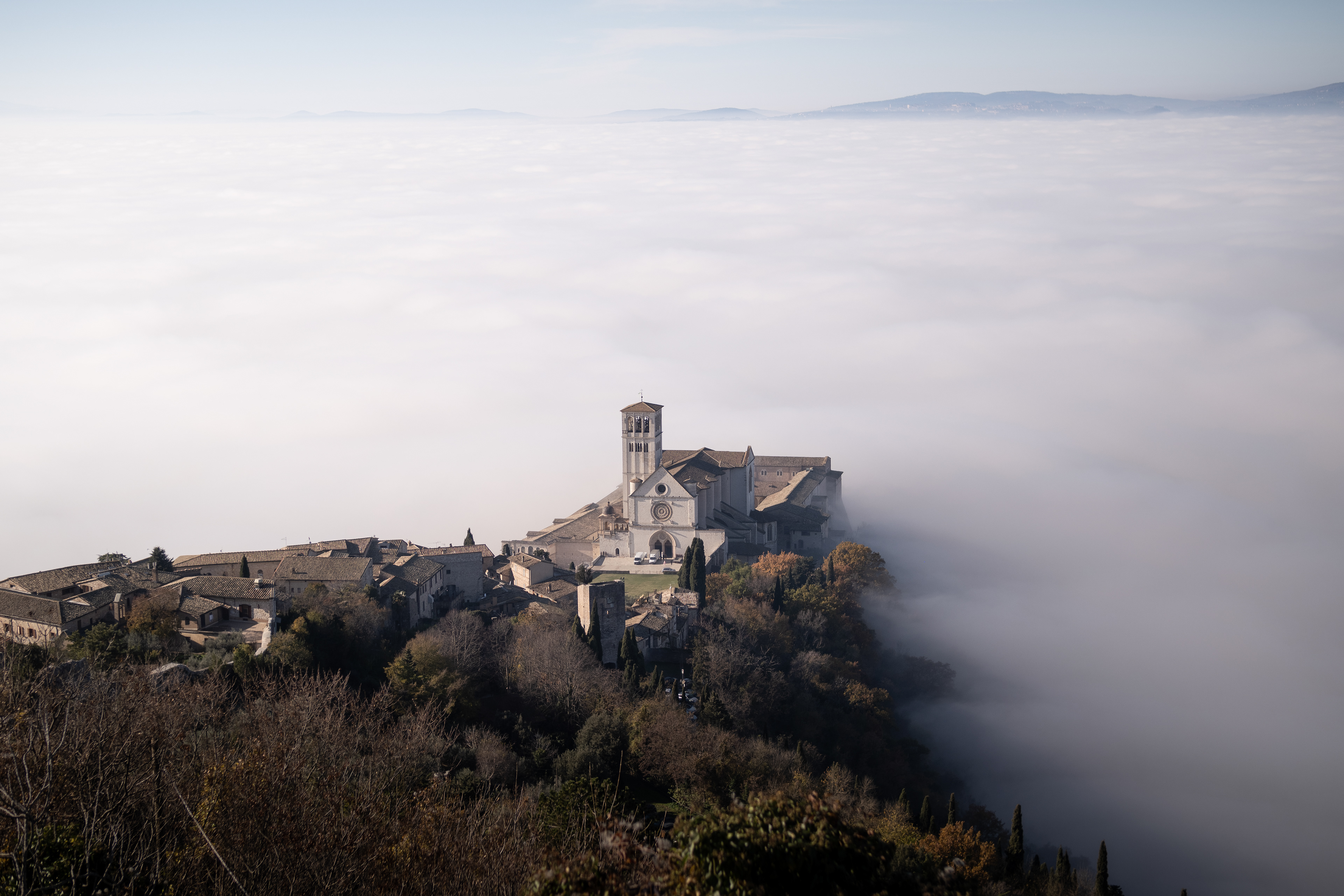
The final part of the day continues on foot. It is already late afternoon, and the light is starting to thin. We leave the city behind and follow the path toward the Eremo delle Carceri, climbing the slopes of Monte Subasio. The distance is long, five kilometers uphill, nearly four hundred meters of elevation gain, but the pace is steady, deliberate.
With each turn of the path, the fog settled in the valley below begins to glow. As the sun lowers, the white mass catches the last light. The city fades from view. The countryside landscape simplifies.
The light is warm and unlike anything I had seen before. The scene presented in front of me looked like a layered painting of nature, each element perfectly placed. The olive trees shimmered, their green leaves catching the golden glow. Behind them, still visible, the winter-resistant trees reflected the same warmth. Beyond, still there, the white fog stretched across the valleys, and the mountains rose on the horizon.
I raised my camera and took photos slowly, without rushing, not overthinking. The result was exactly as I saw it, pure and natural beauty.
This is the same route walked countless times by Saint Francis of Assisi, who came here in search of solitude and prayer. For him, Carceri did not mean prison, but withdrawal, a place to step away from human temptations. At eight hundred meters above sea level, surrounded by ancient holm oak trees, the sanctuary exists in quiet separation from the world below.
We reach the sanctuary as daylight fades. Stone walls, cool air, stillness. For a moment, I feel like a hobbit stepping into Rivendell for the first time. Everything seems in harmony with the land.
We begin our descent. Darkness settles fully around us and the sky is clear. Stars fill the space left by the sun, countless, sharp, uninterrupted. The return is quiet. The road barely visible.
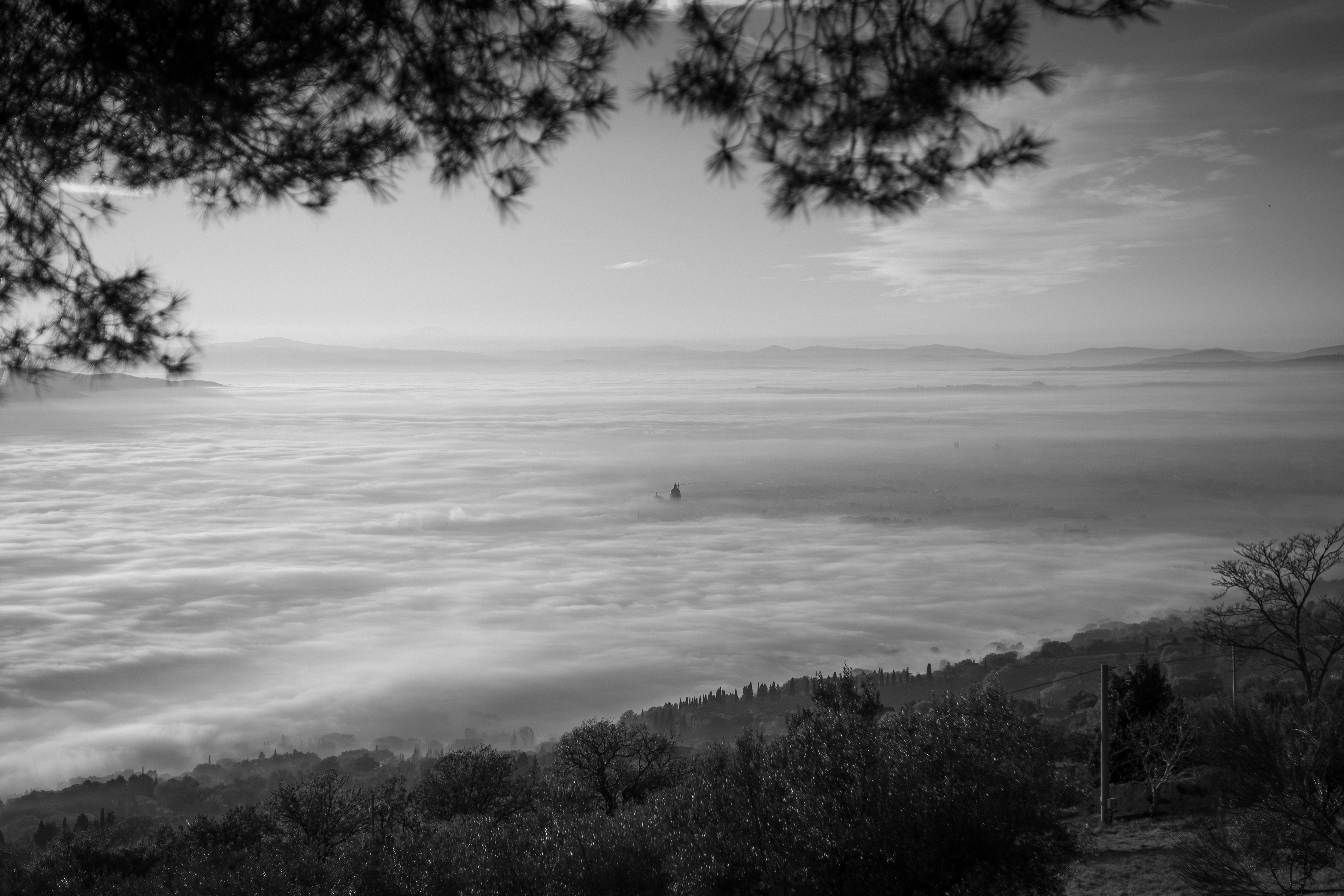
The next day, we leave Assisi and head north to Gubbio. The city rises along the slope of Monte Ingino, climbing sharply from the valley below. Like Assisi, it is built in stone, shaped by its height and by the need for protection. In the Middle Ages, these hill towns lived in constant tension. Gubbio and Assisi often stood on opposing sides, caught in shifting alliances and old conflicts between Guelphs and Ghibellines. Power and survival were written into walls, towers, and stone.
We continue walking.
The path climbs steadily toward the Rocca del Monte Ingino, the highest point above the city. The ascent is about three kilometers, with roughly four hundred meters of elevation gain. The road winds upward, leaving the streets below behind and opening the view with every step.
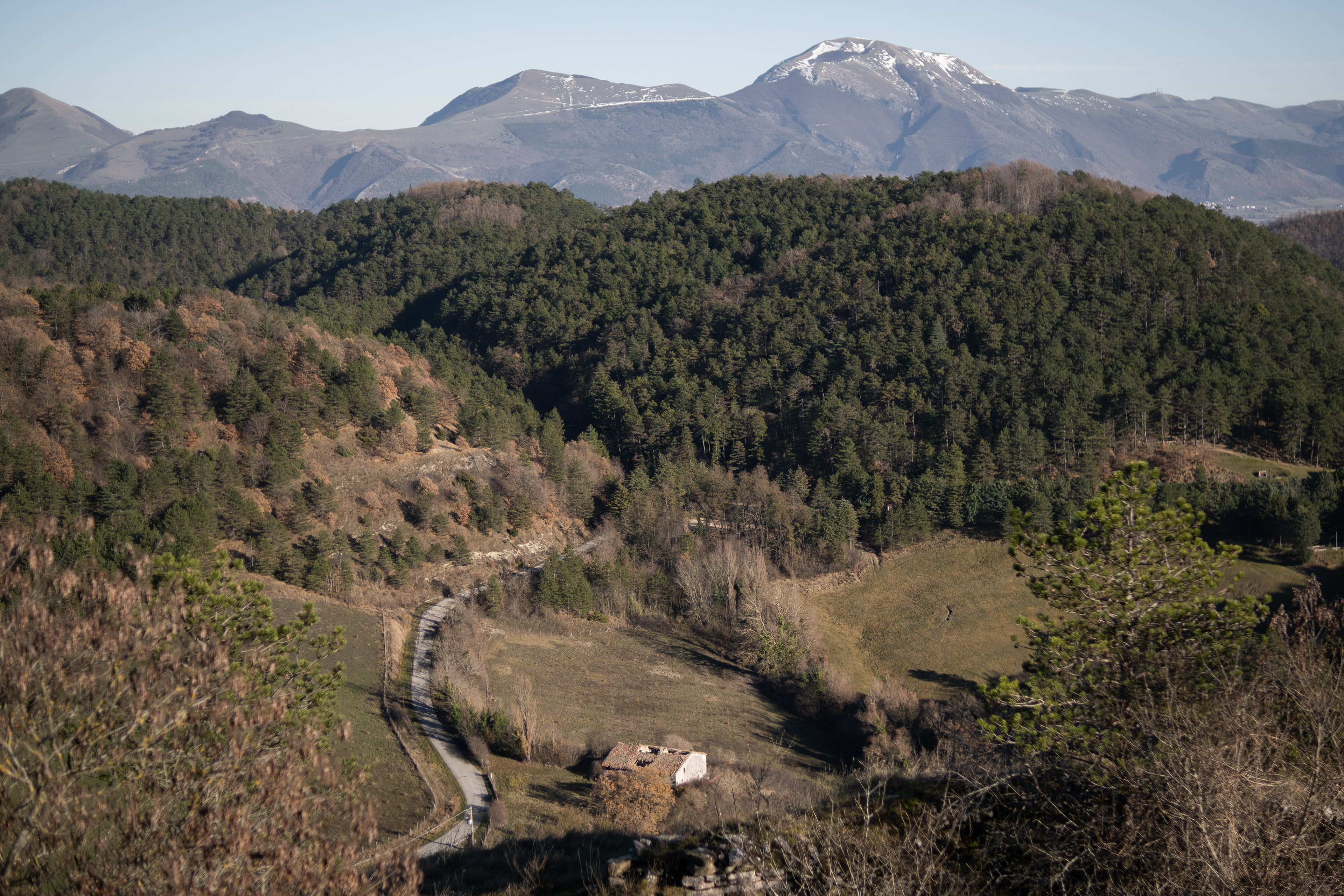
From the fortress, the landscape stretches fully. Gubbio lies beneath us, its stone buildings pressed against the mountainside. Beyond, valleys unfold in soft layers of light and shadow. Turning the other way, the Apennine mountains rise higher, colder. Peaks in the Parco Regionale del Monte Cucco are dusted with snow.
The contrast is clear, warm valleys below, mountains already touched by winter. The landscape changes quickly here, shaped by height and time. From above, the city feels quiet and contained. Distance brings clarity once again.
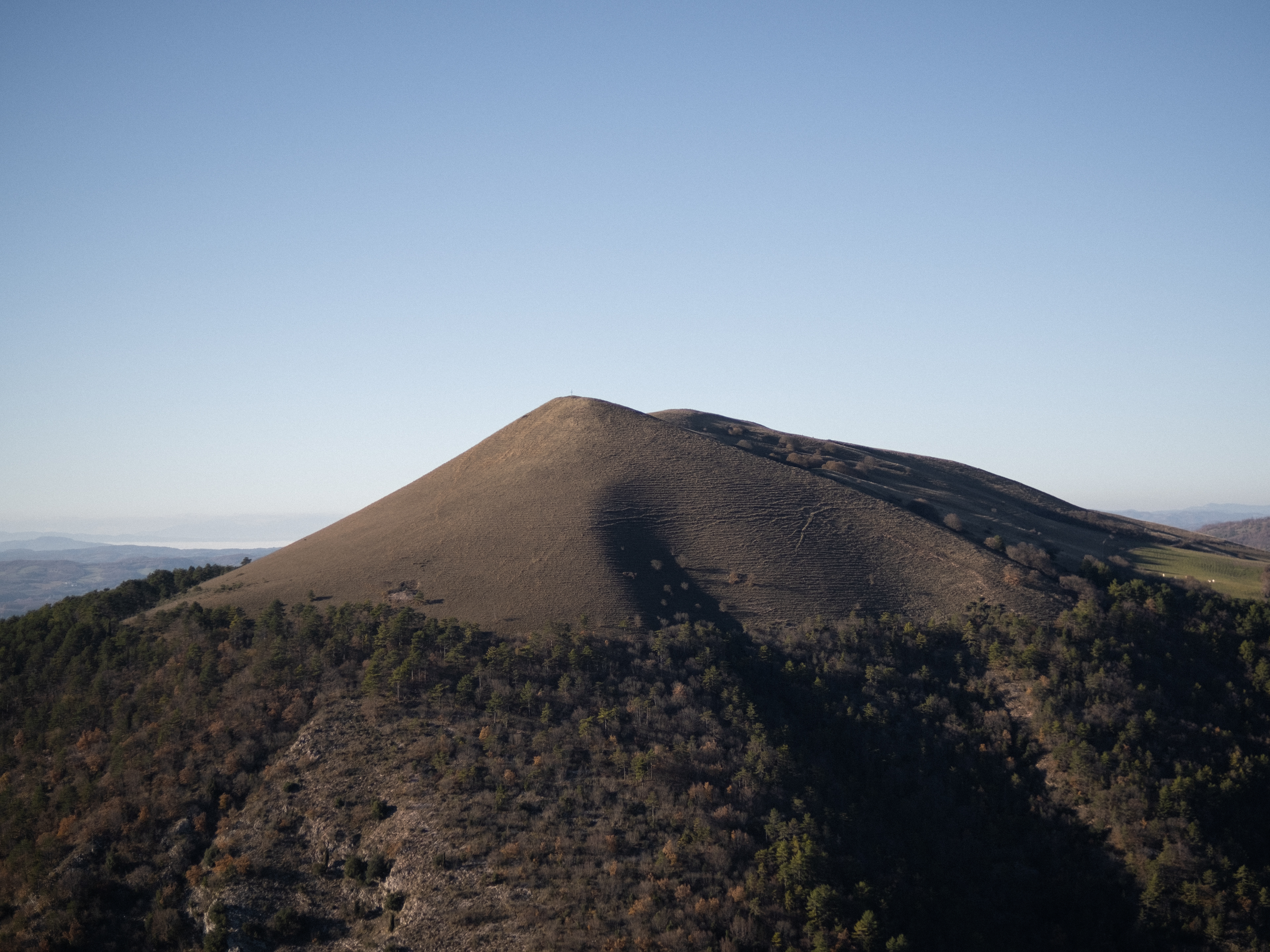
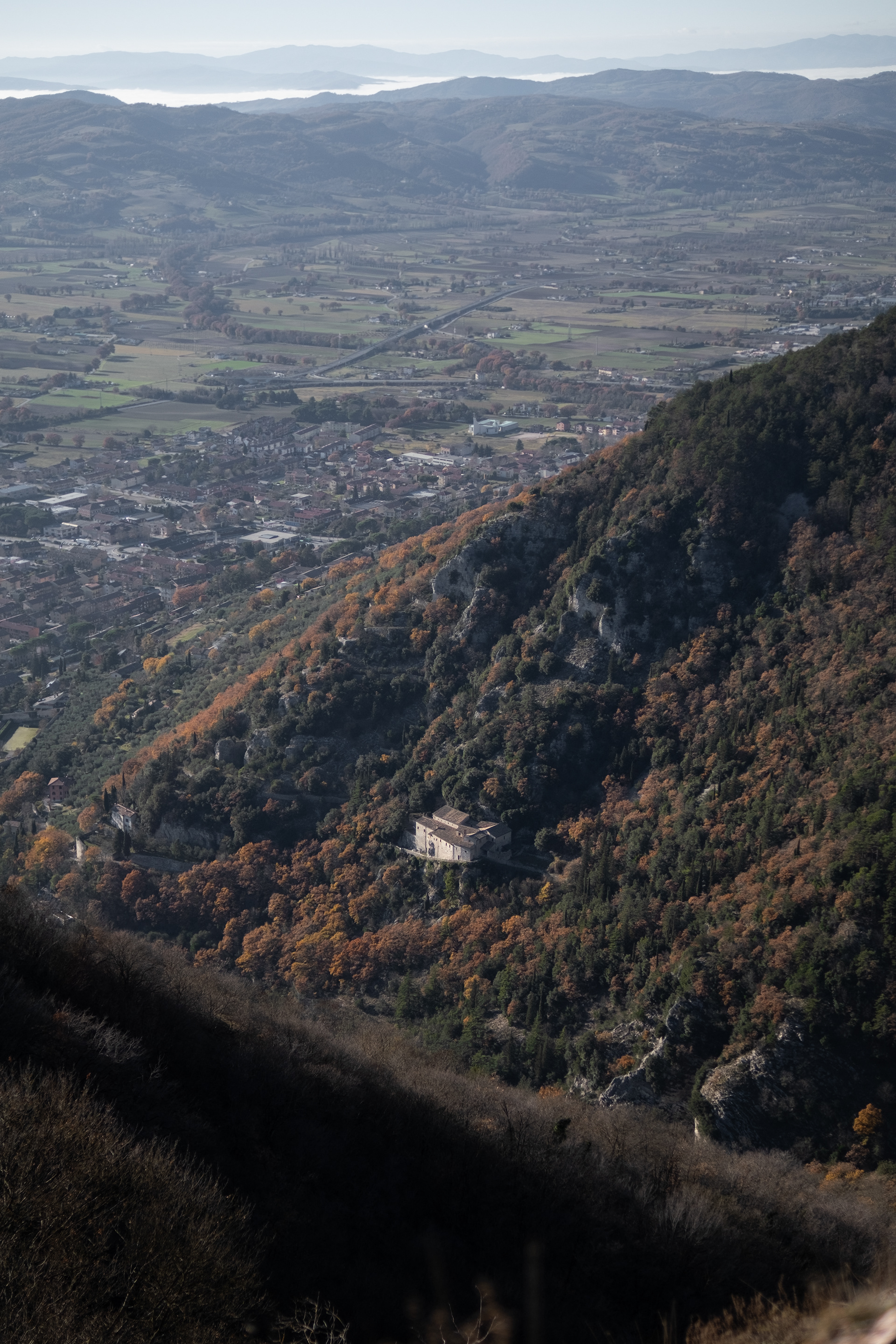
As the journey ends, my vision feels sharpened. For a time, I had left my camera behind on trips, letting moments pass unrecorded. Stepping away taught me how easily experiences fade. This time, I chose to observe closely, to notice light, texture, form, not in pursuit of perfection, but to preserve the landscapes as I saw them.
Each step, each stone, each silent view becomes part of a story that lingers. Walking paths shaped by centuries, through fog-filled valleys and stone cities, photography becomes a way of slowing down, of turning seeing into understanding, and movement into memory.